Antique & Vintage Mirrors
Embracing history, authentic patina, and the careful preservation of historical reflective pieces.
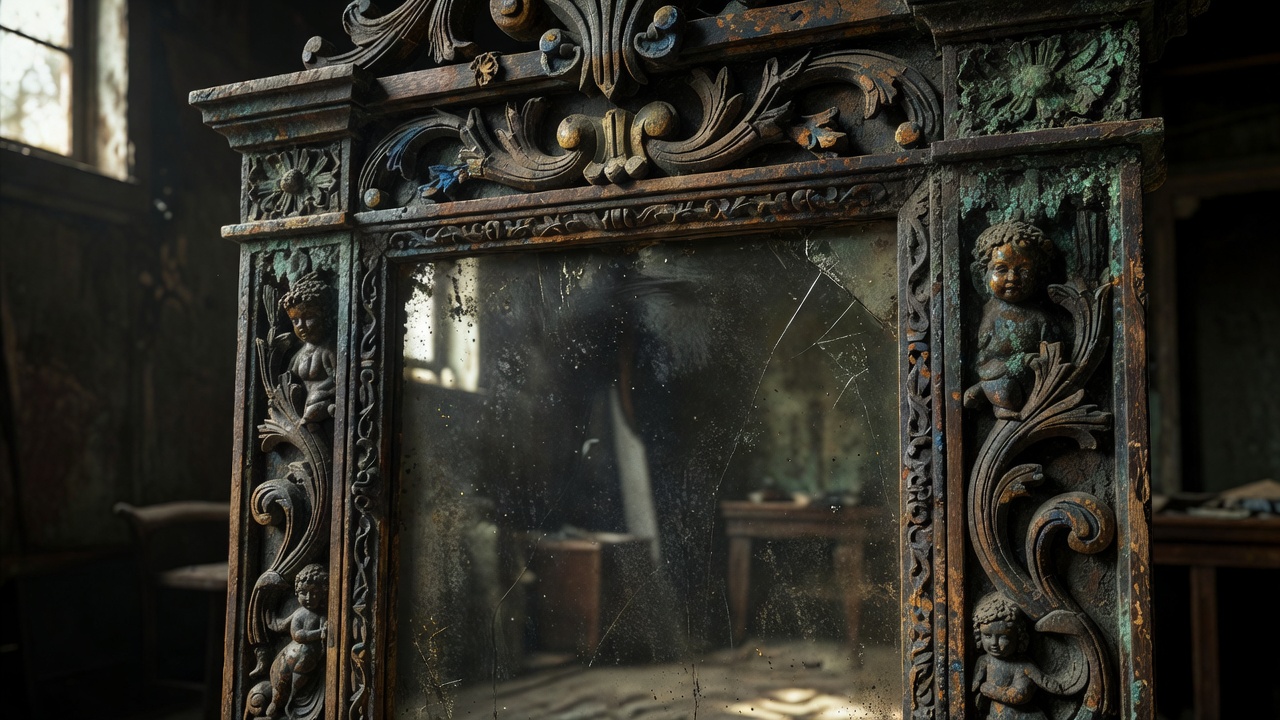
The Allure of the Imperfect Reflection
In stark contrast to the flawless, high-definition reflections demanded of modern bathroom or smart mirrors, antique mirrors are prized precisely for their imperfections. These historical pieces offer a distinct atmospheric quality—a softness to the reflection coupled with ornate, handcrafted framing that anchors a room in history. They serve less as tools for precision grooming and more as dynamic, luminous art pieces.
Understanding Glass Patina and Desilvering
The defining characteristic of an authentic antique mirror is the natural degradation of its reflective backing. Historically, mirrors were backed with mixtures containing mercury or, later, silver nitrate. Over decades, exposure to air, moisture, and temperature fluctuations causes these materials to oxidize.
This oxidation manifests as "foxing"—cloudy, smoky patches, dark speckles, and desilvering along the edges. For collectors and interior designers, this patina is highly desirable, offering a romantic, moody aesthetic that cannot be perfectly replicated by modern manufacturing. In a decorative context, a heavily foxed mirror softens the light it reflects, creating a warm, diffused glow rather than a harsh glare.
Authentic vs. Reproduction
The market for antique mirrors is robust, which has naturally led to the proliferation of modern reproductions.
- Authentic Antiques: Genuine pieces (typically over 100 years old) will have heavy, substantial frames often constructed of solid wood or plaster over a wood base. The glass itself will likely be thick, potentially exhibiting slight waves or ripples indicative of early glass-blowing techniques, and the backing will show natural, irregular foxing.
- Reproductions: Modern "antiqued" mirrors use chemical processes to artificially age the silvering. While these provide the look of an antique at a lower price point and with more reliable structural integrity, the pattern of the foxing often appears overly uniform or repetitive upon close inspection. The frames are frequently made from lighter composites or resins.
Mounting and Structural Preservation
Antique mirrors are notoriously heavy. Nineteenth-century glass is dense, and solid wood frames adorned with plaster rosettes and crests add significant weight. Hanging an antique mirror requires specialized care:
Never rely on the original backing wire or aged eye hooks, as antique metal grows brittle and is prone to sudden failure. It is imperative to have a professional restorer assess and likely replace the hanging hardware. Often, the safest method for mounting a large antique piece is to eschew wire entirely in favor of a heavy-duty French cleat system secured directly to multiple wall studs.
Preserving the Piece
Cleaning an antique mirror requires a delicate touch. Modern chemical glass cleaners—especially those containing ammonia—can seep behind the glass and accelerate the degradation of the delicate historical silvering. It is advisable to clean the glass using a soft microfiber cloth lightly dampened with distilled water. The frame, particularly if it features original gilding or fragile plasterwork, should only be dusted with a dry, soft-bristled brush to avoid stripping away the historical finish.