The Ultimate Guide to Wall Mirrors
Enhancing proportions, increasing light, and elevating interior aesthetics.
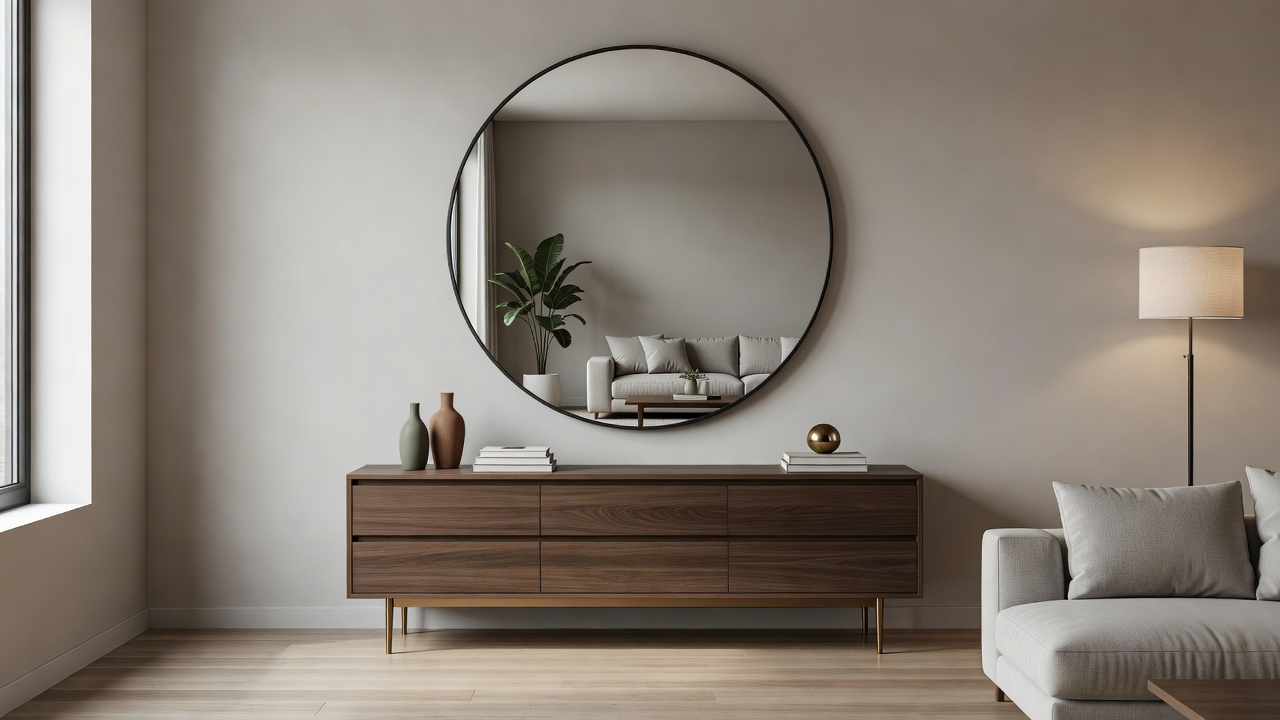
Introduction to Wall Mirrors
Wall mirrors are among the most versatile decorative elements available to interior designers and homeowners alike. Unlike artwork, which absorbs focus and demands contemplation, a mirror dynamically interacts with the room. It reflects its surroundings, captures natural light from adjacent windows, and plays a crucial role in altering the perceived dimensions of an interior space. The careful selection and placement of a wall mirror can transform a cramped, poorly lit room into an open, airy environment.
Strategic Placement for Maximum Impact
The success of a wall mirror relies heavily on what it is reflecting. Hanging a mirror simply to fill empty wall space often results in missed opportunities. Consider the following placement strategies:
- Opposite a Natural Light Source: Placing a mirror directly across from or adjacent to a window bounces daylight deeper into the room. This technique is especially useful in north-facing rooms or spaces with limited glazing.
- Creating Architectural Symmetry: In rooms featuring a distinct focal point, such as a fireplace or an arched doorway, flanking the feature with matching wall mirrors creates balance and a sense of classical symmetry.
- Expanding Narrow Corridors: Hallways can easily feel claustrophobic. A large horizontal wall mirror placed along one side breaks the visual tunnel effect, tricking the eye into perceiving a wider pathway.
Frame Materials: Aesthetics and Functionality
The frame of a wall mirror defines its stylistic character and dictates its physical weight, which in turn influences how it must be mounted.
Frameless Mirrors
Frameless designs offer a sleek, minimalist aesthetic. Often featuring polished or beveled edges, these mirrors blend seamlessly into modern and contemporary interiors. Because they lack a bulky frame, they rely entirely on the glass's reflective quality, making them ideal for bathrooms, home gyms, or spaces where functionality is the primary concern. The lack of a frame also generally reduces the overall weight.
Wood Frames
Wooden frames bring warmth, texture, and organic appeal to a space. They range from slim, pale ash profiles typical of Scandinavian design to heavy, intricately carved mahogany suited for traditional aesthetics. Wood frames can be heavy; large variations require substantial wall anchors or French cleat systems to ensure they remain safely secured.
Metal Frames
Metal framing—such as brushed brass, matte black steel, or polished nickel—provides structural rigidity with a relatively slim profile. Metal-framed mirrors frequently appear in industrial, mid-century modern, and transitional designs. They are highly durable but can be susceptible to tarnishing or rust if placed in high-humidity environments without proper protective coatings.
Mounting and Safety Considerations
Safety is non-negotiable when installing wall mirrors. The reliance on a single nail or standard picture hook is a common error that can lead to disastrous consequences. For mirrors exceeding 10 kilograms, it is crucial to use heavy-duty drywall anchors or, ideally, to secure the mounting hardware directly into a wall stud.
D-rings paired with heavy-gauge picture wire is a standard mounting method, but for exceptionally heavy pieces, a French cleat is superior. A French cleat distributes the weight evenly across the entire width of the mirror, preventing the frame from bowing and ensuring the mirror sits perfectly flush against the wall.
Maintaining Clarity
Dust and smudges compromise the very purpose of a mirror. Routine maintenance should involve a lint-free microfiber cloth and a gentle, ammonia-free glass cleaner. Ammonia can degrade the silver backing of the mirror over time if it seeps behind the glass edges. Spraying the cleaner directly onto the cloth rather than the glass prevents the liquid from pooling at the base of the frame, thereby protecting the silvering from premature "desilvering" or black edge rot.