Bathroom & Vanity Mirrors
Combining essential daily function with robust durability in high-humidity environments.
The Unique Demands of the Bathroom
A bathroom mirror is arguably the most frequently used reflective surface in any home. It facilitates morning routines, grooming, and makeup application. However, the bathroom is also a challenging environment for interior decor. High fluctuations in temperature and humidity require specialized materials that resist corrosion, fog, and moisture degradation.
Sizing and Proportions Over Vanities
One of the most common dilemmas in bathroom design is selecting a mirror of appropriate scale. A mirror that is too large can overwhelm the space, while one that is too small disrupts the visual balance of the vanity unit.
- Width Guidelines: As a general rule, a vanity mirror should measure roughly 70% to 80% of the width of the vanity cabinet itself. For example, a 60-inch double vanity is typically best complemented by a mirror (or a pair of mirrors) spanning no more than 48 inches in total width.
- Height Considerations: The mirror should be tall enough to accommodate both the tallest and shortest members of the household. It is standard practice to hang the mirror a few inches above the highest part of the faucet to allow for cleaning access and to protect the glass from constant water splashes.
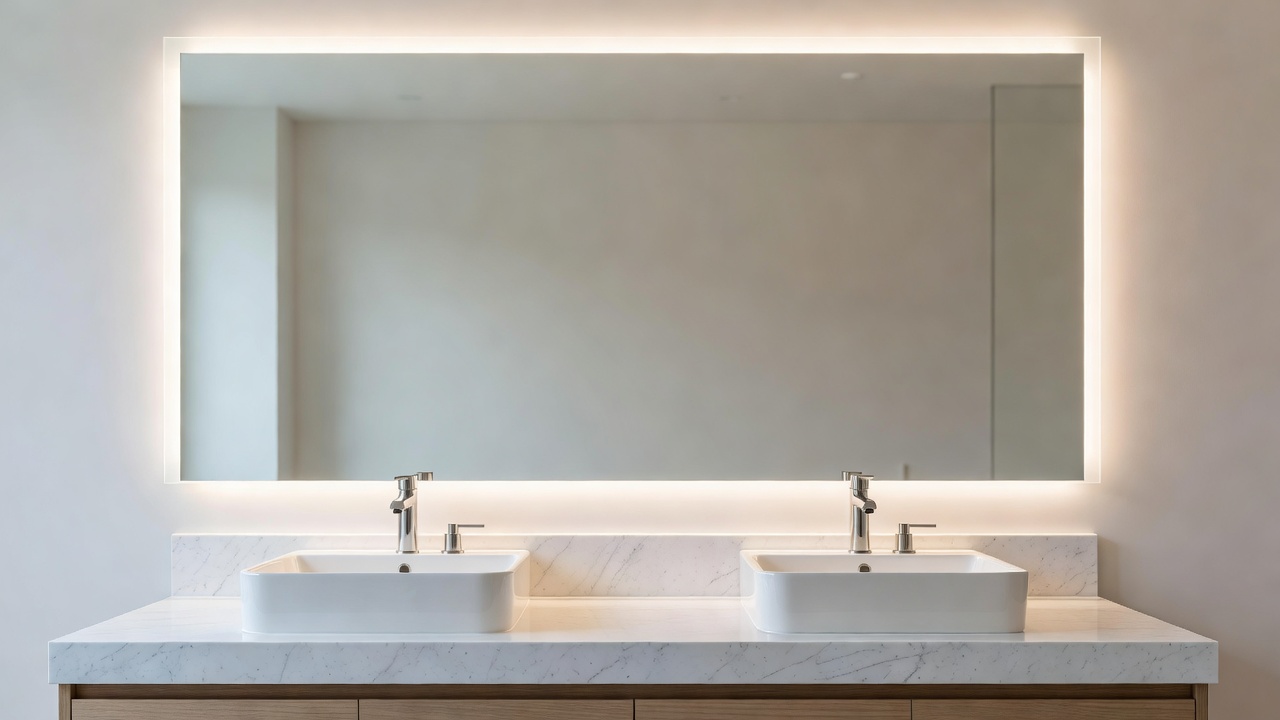
- Double Vanities: You have two primary options: a single expansive mirror that spans both sinks, creating a cohesive, modern look, or two individual vertically oriented mirrors centered directly over each sink for a classic, compartmentalized aesthetic.
Moisture and Desilvering
The reflective properties of a mirror are created by a thin layer of silver (or aluminum) applied to the back of the glass, which is then sealed with protective paint. In bathrooms, moisture can penetrate this seal—especially at the edges—leading to "desilvering," where black spots or cloudy areas form at the mirror's border.
To combat this, manufacturers of dedicated bathroom mirrors utilize copper-free backing and specialized sealants. When selecting a mirror for a wet environment, always verify that it is explicitly rated for bathroom use. Frameless mirrors often feature a beveled edge that naturally sheds condensation, though framed options built with moisture-resistant materials (like treated aluminum or composite wood) are also viable.
Integrating Storage: The Medicine Cabinet
In bathrooms where square footage is at a premium, the mirrored medicine cabinet remains a highly efficient solution. Modern iterations have largely moved away from the bulky, protruding cabinets of the past.
Today, flush-mounted (recessed) medicine cabinets are set entirely within the wall cavity between studs. This installation method provides essential hidden storage for toiletries and medications while presenting the sleek, low-profile appearance of a standard wall mirror. Some advanced cabinets include interior mirrored panels—allowing you to see your reflection even when the door is open—and built-in electrical outlets to keep electric toothbrushes and razors hidden while charging.
Lighting Integration
A bathroom mirror is only as effective as the lighting that surrounds it. Overhead lighting alone creates harsh downward shadows, complicating shaving and makeup application. The ideal lighting setup involves flanking the mirror with eye-level sconces to provide even, cross-directional illumination. Alternatively, mirrors with integrated frosted lighting strips have become increasingly popular, offering an all-in-one solution that ensures shadow-free task lighting directly from the reflective plane.